Tuesday, January 25, 2011

Dressing Miss Daisy

If you are a man, you may stop reading this, unless you are a clothing designer.  If you are a size 10 or below, don’t bother with this week’s blog.  Finally, if you have not yet reached a “certain age,” this may be a waste of your time.  (If you don’t know what a “certain age” is, then you haven’t reached it.)  The rest of you, share my pain.

Shopping, my one-time favorite sport, has recently begun to trigger feelings in me that were previously reserved for trips to the dentist.  As I tiptoe into my 50s, it has become hard to find “appropriate” clothing. And by appropriate I mean clothing that is neither a tropical print mumu, nor requires a belly ring as a finishing accessory. Clothing that has not been designed for our mothers or our daughters.  

Don't let it happen to you.
Photo: Mumumuesli.com
 Isn’t anyone designing for the nearly 55 million female baby boomers aged 50-64? You know, the average American women who, according to the Los Angeles Times, weigh in at about 162 pounds, and are looking for nice clothing in sizes 10-14? These women are scouring stores for clothing, and managed to spend over $19.6 billion last year--with little help from retailers.

Size 14.
Photo: Amuseum.org
Lady boomers are getting mixed messages.  The media fixates on their outward appearance, but they are often shut out of better clothing because of their age or size.  They are urged to think thin, but Professor Rob Brooks at UNSW found that most men preferred the shape of average women over the emaciated models used to sell clothing.  You would never suspect this preference leafing through magazines, watching runway shows or even visiting your local malls.  Men, where were you when Miuccia Prada vowed that she would never design clothing larger than a size 10? Why didn't you step forward and tell Prada that you like it when your “baby got some back.”  (Of course, “size 10” has less meaning today; according to Sean Poulter at the Daily Mail many chains have increased waist sizes up to 1.6 inches in order to make women feel better about themselves. But more on that another day.) To Prada who specializes in insulting average women, and the stores that specialize in “larger” clothing here is a message:  Being larger than a size 10 is not an illness nor does it result in cravings for polyester and elastic.

Nuff said.
Photo: Ancianosolucion.es
It seems that in their frustration women of a certain age have migrated to the internet.  Market research firm NPD concludes that 65% of online apparel sales go to women over age 35, with the bulk of sales to women 55 to 64 years old.  The offerings in retail stores are so slim that they must settle for clothing that they cannot touch or try on before purchasing.  That probably won’t help solve the problem.

While we wait for twenty-something merchandisers to make sophisticated, attractive and appropriate clothing for fifty-something women in sizes 10 and above more available, here is a set of guidelines collected from aging shoppers for aging shoppers:
Probably not this...
Photo: Thegloss.com
If you wore it the first time it was in style, you are not allowed to wear it the second time.  Retro is a no-no. Stop drooling over the platform pumps and flaunting your butt crack.  You had your chance in the 60s.

Do not wear anything that gathers under the bust.  While this style flatters girlish figures, it makes you look like one of those grannies that seek out unethical fertility doctors.

No puffed sleeves.  Puffed sleeves are only permitted for adolescents, tweenagers and Swedish milkmaids.

Do not tuck your jeans into your boots unless you are in the army, on safari or mucking out a stall.

Be conservative when it comes to glitter.  It can sometimes add a shiny glow to parts best left in the dark.

If your friend tells you it’s “cute” leave it on the rack.

Avoid synthetics. Polyester and hot flashes do not mix well. 


But not this either...
Photo:  Sodahead.com
In the end, appropriate is what feels comfortable and right.  Wrap the wisdom, beauty, clarity and confidence that you’ve gained in clothes that highlight who you have become.

Too comfy?
Photo: Kaboodle.com


Monday, January 17, 2011

Tipping Over

Wanted: 
Hard worker who is willing to take abuse from public and coworkers, move fast, multi-task, lift heavy objects, accept weekend and evening hours.  No benefits, and little or no opportunity for advancement. 
Really, would you be smiling?
Photo: Sodahead.com
Before you rush out the door to apply for this job, you should know that your hourly pay will not be enough to buy you a latte.
In America it’s perfectly legal to pay our 7.5 million food and beverage workers as little as $2.13 per hour, since tips are expected to bolster their income. Their actual average wage in the U.S. is $4.35 per hour, about half of minimum wage. The only difference between $2.13 and a living wage for some servers might your tips.  
She'll probably have to pay for that drink too.
Photo: Phoenixnewtimes.com
According to Keep the Change by Steve Dublanica, we spend $66 billion on tips annually, and table service is just the beginning. We are topping off the tab for everyone from sitters to clippers, from car washers to coat checkers from valets to tattoo artists. A quick Google search demonstrates that thousands of blogs, books and articles have been penned exploring tipping in various scenarios, seasons, times, cultures, and that there are a myriad of other mind-boggling nuances relating to the practice.  The resulting comments also reveal how adverse many Americans are to tipping, and how they feel taken advantage of in situations when they have been served poorly, especially in restaurants. Tips have become an expectation and an obligation, even for mediocre or meager service. But to all the people who stiff their server for being surly, I ask how $2.13 per hour might affect your mood or performance? 
Photo: Funnypictures.net
While tipping is traditionally related to service the newest revolution in tipping, and one that has happened in my adult lifetime, is the advent of the tip jar.  These elaborately drawn and prominently placed vessels are generally found on the last frontier of tipping:  counter tops at self-serve establishments. Though the word self-service begs an oxymoron, these jars have become the norm. The rules of tipping are less defined for countertops; I find that I am likely to tip more or less depending on the tip jar sign.  Here are some of the tip-inducing tactics I have seen around town:
From the look of this jar, kittens are in trouble.
Photo: Hotdogprofits.com
Tactic: Cajoling
Feeling tipsy?
-or-
Tips are appreciated.
These pleas are the simplest, most common approaches on tip jars. I tend to leave money in these containers, because I read this subtitle: “The reason I need tips is because I have no imagination and cannot get a better job.”
Tactic: Threatening
The more you tip the nicer we are.
Ok.  How insecure do you have to be to bend over for that one? Be strong, you don’t need another friend.
Tactic: Promising salvation
All good tippers go to heaven.
I can’t help but wonder if this means that bad tippers go to hell?  And what of those few brave (or foolish) souls who deign not to tip at all?  Did Dante describe a level of hell with tortures reserved for tightwads?
Tactic: Social commentary
We are trying to raise $700 billion for rich people.
I usually tip big when I see this sign, because I feel sorry for rich people and small tips probably won’t help them much. (Do Republicans think of tipping as socialism?  Are they permitted to skip tipping because of their abhorrence to sharing the wealth?)
New RNC fundraising effort?
Photo: superpunch.blogspot.com
Tactic: Comedy
We knead the dough
A bakery and pizzeria favorite--I acknowledge the point and forgive the pun.
Barista kidnapped by Ninja clan.  Raising money for Kung Fu lessons.
 I would do anything to help get my favorite Barista back.
Tipping.  Not just for Cows.
I feed this tip jar because I suspect that the writer is a fellow Midwesterner. Of course I could point out that tipped cows don’t do anything extraordinary either, except perhaps show the same propensity as counter help for sometimes standing around looking vacant.
Some things money can't buy.
Photo: Moneybagsfull.com

Then there's the direct approach...
Photo: Buzzfeed.com
Creative or not, I hope you feed the jars and tip the servers.  Especially if you are one of the lucky people protected by law to receive minimum pay wage for your hard work.  Really, shouldn't $2.13 per hour at least buy a little tolerance?

Friday, January 7, 2011

Face Off

If you have ever called a dismal house “a fixer upper,” if you have described a potential blind date as being “mature” when you meant “old” or if you have commented on a baby being “a little doll” when you meant “looks like Chucky” you are ready to use social networking.

Oh, Is it a boy or girl?
Photo: famousmonstersoffilmland.com

 I know this may shock you, but you deserve to know. People are not always completely honest on social networking sites. This sometimes leads those of us who are doing the reading to believe that everyone’s life is charmed, except maybe our own.

OK, maybe some people do have more fun...
Photo:ratestogo.com

 That’s what Stanford researchers Monin, Dweck, Gross and Jordan say in their December 22nd article in Personality and Social Psychology Bulletin.  They outlined what they think we don’t already know: That social media is a way for us to create a public persona that may or may not be accurate. The researchers studied 460 students at Stanford (not a population known for self-effacement) and found that Facebook was creating negative self-images in students who compared their actual lives to posts describing the lives of others.  If these elite students are saddled with  self-pity from viewing Facebook pages I shudder to think of how the rest of us might react.

Stanford student after Facebooking?
Photo: theonion.com

Other studies give us some insight into these optimistic self-portrayals on social media sites.  Soraya Mehdizadeh of York University found that it is narcissists and people with low self-esteem who use Facebook the most.  Evidently, the narcissists think that their own inflated self-image is true.  The people with low self-esteem are using Facebook to frame their fantasies.  Both groups (and everyone in-between) use Facebook and other sites as a tool for self-promotion. With social media we have the opportunity to market ourselves, our best selves, to others every time we post. That’s what makes even Stanford students feel inferior to us.  Why then do we post such idiotic things instead? That brings us to the dark side of social media.


Ralph Waldo Emerson once said “It is one of the blessings of old friends that you can afford to be stupid with them” but one of the curses of Facebook is that stupidity endures, is reposted, is read by friends of friends, is viewed by your boss, your landlord, your spouse and strangers.

It’s easy to find stories about stupidity on Facebook .  In fact there are Facebook pages devoted to it!  There you can read about the consequences of public stupidity, including  broken marriages, school suspensions, and lost jobs. These people forgot that Facebook is a social network, not a rant room.  But spouses, principals and potential bosses haven’t forgotten. They see some of that nasty stuff.

Some things should remain unseen.
Photo: ifimbored.com

 According to Facebook’s own information there are more than 500 million active users on their site, and half of them view their pages on any given day.  In fact, they are the most visited web site of 2010, surpassing even Google! But forget these big, abstract numbers.  Facebook’s average user has 130 friends.  If these 130 people were gathered in an auditorium, would you get up on stage and announce that you hate your job, present a slide show featuring your underage drinking and nude photos and discuss your addiction to prescription pain meds?  (Unless you’re from Hollywood in which case your publicist has posted all of this for you.) 


 Facebook tells us that the average user creates 90 pieces of content each month. Your friends are reading about your life (or fantasy life,) as are their friends and other harmless, but interested strangers.   But also scanning the content are criminals, pedophiles, and con artists mining data and looking for opportunities.  Even worse than criminals, Facebook now allows advertisers to target you through your interests and information.  The Federal Trade Commission urges us to respect these safety and privacy guidelines:

1.     Make sure you’re on the right site.  OUTeverywhere is not a travel site, and WeeWorld is not a meeting place for urologists.

2.     Don’t post anything you wouldn’t want the world to know. This means post only what you do want the world to know.

3.     Restrict access to your pages. This should include all photos taken during spring break or that wild night at Surf ‘n Bowl.

4.     Don’t post any critical information like your social security, bank or phone numbers. Don’t post mine either.

5.     Don’t post info that can help people locate you offline.  A post like “I nude sunbath in my yard everyday at 2:00” can’t end well.

6.     Don’t announce when you will be away from home. If you must post your vacation plans don’t add “And I leave my key under the mat.”

7.     Don’t use a screen name that could be suggestive.  “Hotnwet” may not get across that you work in a tea house.

8.     Don’t post photos you wouldn’t display in your home. See #3.

9.     Don’t assume that strangers are who they say they are.  (My dog has a page, but he usually doesn’t write it.)

10 . If you must meet people from online connections make sure that you only meet in public places.  Make sure others know where you are, or better yet, go with you. It may not be the person you think you're meeting that you encounter.


Um, my new profile picture...
Photo: luxist.com

Social media can create a public life, or make our lives too public.  It can bolster our self-image, or make others doubt theirs.  It can connect us to old friends, or expose us to unknown enemies. It can remind you of who you were, who you are and even let you try out who you might like to become.  The possibilities are endless. So have fun, but be sane and safe.  Because Facebook is forever!           


Thursday, December 23, 2010

Meating Old Friends

My childhood friend came out to visit last week, and brought me lots of memories that she's been holding for both of us.  I spent a week laughing about childhood shenanigans, I cried when we could finally mourn lost family together and I spent way too much money shopping.  Now that she's gone and I am falling back into the rhythms of my own life, I have one lingering regret.  That we didn't eat more hamburgers.

How many burgers does it take to satisfy a couple of Ohio girls?
Photo: foodnetwork.co.uk
Oh, I know.  Hamburgers are bad for you.  But it was good for me, a mother of two mysteriously vegetarian offspring, to order hamburgers with no guilt.  Sitting across from my vegetarian daughters and my foodie husband makes it far less enjoyable to order a real thick, juicy hamburger.  Preferably with cheese. And grilled onions.  It causes my poor children to turn slightly green and look away, as though I am openly picking my nose or wearing the fur of an endangered animal.

I know this affection I have for meat is wrong.  The World Watch Institute and the Watch Mom Eat Institute (OK, I made that one up) remind me that livestock emit 16 percent of harmful methane gasses. With meat, the average U.S. diner requires twice as much water per person per day than a vegetarian.  A diet high in meat can use  two to four times more land--sometimes deforested land--than a vegetarian diet.
It's just not the same.
Photo: wellsphere.com
Then there are the health concerns. Red and processed meats have been associated with an elevated risk with colorectal cancer, cholesterol, and heart disease.

 Let’s not even get into the unethical business practices of the large beef producers and distributers.*

I always wanted to be a salad person.  One who picks at her food or forgets to eat lunch entirely.  But I am a meat person who seldom misses a meal (see profile photo.)  Whether it is my upbringing, my palate or sheer stubbornness, I love my burgers. 

Are those tomatoes really necessary?
Photo: Nancy'srecipes.com
 What makes it worse is that I love food but I’m not a foodie.  My lovely husband has taken me to many elegant restaurants and despite my best intentions I end up scanning the menu for the plainest, most savory food available. For me, ordering gourmet delicacies on one of our dates is like golfing at a really nice golf course.  It’s a waste of money that leaves me unsatisfied, and a little embarrassed. Just as I prefer our local 9-hole course, I prefer the diner, with its charcoal smells, the sound of grease fans going full blast, the formica floors and the tabletop jukeboxes. 

What I eat when I need a break from burgers.
In this age of conscientious eating, meat has become my vice. Forget the heroin, after my kids move out I am sitting down with a side of beef for a three day burger bender.  The smell of pot roast and root vegetables will be thick in the air. I will carve the leftover tofu into the shape of a cow and use it as a centerpiece.  Meanwhile, I have taken the following measures as outlined by Progress Report.cancer.gov in their Dietary Guidelines for Americans (DGA.)  Who knows, maybe they will become permanent:

Eat meat in moderation
According to the DGA we can eat 18 oz. per week.  I was surprised at their generosity, until I realize how large most restaurant portions can be.  So, it works out to about one steak and one burger per week. Still, it’s do-able.

Order or buy the best cuts available
Ground meat that you buy in the market is usually clearly marked for cut and fat content.  Stick to single source cuts (like round or sirloin) and look for the lowest fat content possible.  Also, look for origin; cattle raised on grass produce healthier meat.

Prep properly
Try baking or broiling meat rather than frying or grilling it to avoid the use of additional fats or the potential carcinogenic effects of char.

Leave off the fatty side dishes
Sigh.

Photo: laughparty.com

These are good first steps to cutting down on the consumption of meat. As a safeguard, I have my girls and my guilt keep me in line.  Oh, I can’t wait for my friend to come back and visit again in the near future. But I guess it would be a good idea to leave those burgers in the past.

What? It could happen!

Photo: alternativeoutfitters.com
*If you want to read further about monopolies in the beef industry, unsafe food processing and other “turn me vegetarian” topics read the excellent book “Fast Food Nation by Eric Schlosser.


Saturday, December 18, 2010

Dress Me Up

Most of us can remember playing dress-up, pretending to be fairy princesses, cowboys or maybe space creatures.  My Mother’s tablecloth, some aluminum foil and maybe a stick had transformative powers, changing us from timid children to intrepid heroes.  As adults, I suspect that some of us still look for dignity or daring in our clothing.  We hint at who we are through our clothes, and we scan others for clues to their identities as well.
Anything is possible when you're a fairy princess
Photo: Creative-edu.com
In the field of communication studies, this is called the social construction of self and others. To illustrate the concept I used to give my students pictures of people in a variety of outfits and ask them to tell me their stories.  Never once, in 8 years of teaching, did a student say to me: “How would I know anything about them?”  The pictures seemed to have all of the information necessary for my students to construct detailed stories of the character’s lives, including political and sexual preferences, the type of work they did and even how their apartment was furnished! My daughter and I play this game in rush hour and at the mall sometimes, to pass the time. Where are they going? What will they buy today? It can be fun, but it also acts as a constant reminder that on some level, people are also making constant judgements about us.
What's the story?
Photo:Good-times.webshot.com
Wendy Leeds-Hurwitz delves into clothing as social code in her book Semiotics & Communication: Signs, Codes, Cultures. Really, the book is as tough to read as the title, but Chapter 5’s message (after 3 Advil) is quite clear.  You are what you wear. 
Unfortunately, understanding how to shape opinion through clothing is not simple.  Take bow ties.  Leeds-Hurwitz discusses gender, context and age as just some of the determining factors in whether a bow tie means a person is independent-minded or untrustworthy. Every individual piece of clothing you wear sends a message, either in harmony or discord with the other items in your ensemble. Leather jacket?  Rugged.  Paired with cashmere? Not so much. These observations seem to be common sense, but when it comes to clothing common sense seems to elude even the most determined of fashionistas.
Clothing and accessories can send mixed messages
Photo: FreeRepublic.com
Our lack of common sense has encouraged some companies to codify pretty basic rules for their employees.  For example, cab drivers in New York may not wear underwear as outerwear.  (Clearly a hardship for cab drivers; dnainfo.com reports a generally negative reaction to the rule change.) Underwear, or the lack of it is featured in any number of dress codes.  The "observable lack of undergarments" is forbidden for city workers in Brooksville, FL according to Tampa Bay Online. Brooksville adds that their employees should wear deodorant (really,who would come close?)
Is this what Brooksville was facing?
Photo: Gossiponthis.com
Yes, these are extremes, but changes in clothing through the use of dress code have had pronounced effects for many organizations.  Long Beach Unified School District has reduced gang identification with school dress codes and uniforms, dropping violence by over 76%. Callcentrehelper.com reports that British Gas’ uniform policy strengthened ties with the community and improved work attitudes.  It is probably these types of results that encouraged the 43-page dress code from UBS Bank this week. And why I read it before my job interview this morning.  I didn’t think it could hurt to try it out.  So I shaved my legs, wore underwear (under my clothes) and applied deodorant.  I buttoned my blazer and left my showy accessories at home.  Alas, I did not get the job.  Which leads me to the conclusion that you are not, after all, what you wear.  Maybe I should have stuck to fairy princess?
My next interview outfit


Friday, December 10, 2010

Doctored Up

My Jewish mother wanted her two children to be a doctor and a lawyer and was quietly disappointed when she got an advertising account exec and an entrepreneur. She told people we were an accountant and a businessman. My brother did fulfill her dream late in life with a Law degree...sort of an afterthought for him. I went back to school too, but confused her even more when I came out with a Master’s in Communication.  “Vat is dat?,” she would ask.  “You graduated in talking?!”  

I always had the secret desire to go on with my education and become a doctor for her.  Maybe not the kind she wanted.  But she would be able to tell her friends “Yes, I have two children.  One is a Lawyer, and one is a Doctor.  Not a real Doctor, but she’s a good girl.”
Mom with husband, future lawyer and future good girl.
I wanted that Ph.D. for me too.  I enjoy learning and teaching, and I wanted the skills and the feeling of completion that the degree would provide.  But I watched as some very talented colleagues (and some morons) went on to achieve their Doctorates, while I paused (temporarily, I thought) to have my children. Time passed, and now it has been more than a decade since I have been a student.

Imagine my joy when I found out that it isn’t too late to have the distinction of being Dr. Susan Burrowes.  I just have to come up with the money.

You get what you pay for.  According to cityofsmoke.com I can realize my dream for only $29.95.  That’s how much it costs for an honorary Doctor of Divinity degree from Kirby Hensley's renowned Universal Life Church.  If I want a more prestigious degree I can pony up $225 towards Trinity Institute of Christian Counseling’s online Christian outreach efforts. But they do require you to partner in their mission, and well, I can’t seem to reconcile becoming an online missionary with the goal of pleasing my Jewish mother.  Now don’t make the mistake of thinking that only religious institutions are handing out degrees.  Respected secular schools do it too.  For example, a Berkeley degree can be yours, with the suggested minimum donation hovering at $3500.
Dr. Bill Gates, h.c.
Photo: Life Magazine
Honorary degrees have been awarded since 1478, when Oxford awarded Lionel Woodville, dean of Exeter and brother-in-law to Edward IV a degree (some say to curry favor with the King.) But not all honorary degrees are bogus. Benjamin Franklin, Albert Einstein, Nelson Mandela and Maya Angelou have all been graced with well-deserved honors.  Unfortunately, they keep suspicious company.  Honorary degrees have been bestowed upon Robert Mugabe, the ruthless, senile dictator of Zimbabwe (though one of his three honorary degrees have since been stripped) and Cat Stevens, now known as Yusuf Islam, who endorsed the fatma on writer Salman Rushdie, and who refuses to shake woman’s hand. You don’t have to be a ruthless dictator or zealot misogynist to receive the honor. Business luminaries have also received the degree.  For example, Bill Gates, the chairman of Microsoft received his honorary degree from Harvard. (Dr. Gates originally dropped out of Harvard after 2 years in the undergraduate program.) Honorary degrees are also frequently awarded to music and film stars like the Bee Gees, Kim Catrell and Orlando Bloom.  But the degree that makes me feel good about my own odds is the award to Kermit the Frog. Dr. Kermit received his honorary Doctorate of Amphibious Letters from Southampton College in New York in 1996.
A proud moment for Kermit
Photo: google.com
Next time you hear a radio talk show host, a television personality, a ruthess dictator or frog referred to as Dr. or Professor, look for the telltale letters “h.c.“ This is the small print, Latin for honoris causa  "for the sake of the honour" that is supposed to be listed after the person’s name.  Other than that there are no guidelines or rules as to who can call themselves doctor.
I’m not sure my mother would have approved.  In the end, being a “good girl” was more important to her than being a doctor.  So maybe I’ll concentrate on that, and forgo the “honours.”  If there are others of you out there who have always wanted to be a doctor, but didn’t have the time (or brains) here is your big chance.  All you need is a little money, and a lot of nerve.

Doing it the hard way
Photo: worldmuralproject


www.WiseGeek.com
www.Indiatimes.com
www.guardian.co.uk
history news network
Judith O’Reilly, London Times
www.cityofsmoke.com
www.onlineschools.org
www.themoneytimes.com
knoll.google.com
Cosmopolitan University


Friday, December 3, 2010

The Experiment


I find myself in the afterglow of an unexpectedly fun vacation when we joined with  our family living across the state to share a rented house in the middle.  “Fun,” “family,” and “share” all in the same sentence? I think it was “middle” that made it all possible.  The right time, place and pace made “middle” a happy destination this Thanksgiving.
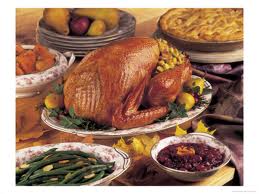
Turkey I didn't cook on a table I didn't set
Photo: Wikivisual.com
The time.
It was Thanksgiving, a vacation time sanctioned by the calendar.  Getting together around holidays makes sense, not only because they are traditional family times, but because nobody else is working (and getting ahead) while we play.  According to a 2009 study by Harris Interactive for Expedia, 34% of Americans don’t use their vacation days even though 1 in 4 working adults have trouble coping with work related stress. We get an average of 13 days per year, but due to guilt and performance pressure we leave as many as 6 of our 13 days untaken!  Compare this to France’s average of 38 days, with 2 days untaken (no wonder they have time for love.) Given our hesitation to take the time we’ve earned, the holidays are a great way to force some fun on us.

Rare photo of husband and brother not working.
The place.
Don’t get me wrong.  I love having family visit us here at our home.  But here, the joy of family comes with the job of “company.” Yes, it is a labor of love, but it is labor nonetheless. It seemed natural at our mid-state rental that everyone pitched in, and that nobody bore responsibility for the comfort and happiness of others.  Guess what?  Everyone was comfortable and happy anyway!


The pace.
More than a third of us work more than 40 hours a week.*  After work we tend to our families, our homes and our hobbies. It is not surprising then, that we lose touch even with those we hold most dear.  Vacationing together helps us find each other again. For example, I learned last week that my brother and I are more alike than I knew. It turns out we both believe in an intricate and intrinsically ordered universe AND we both hate to empty the dishwasher.  Who knew? 


There are practical considerations to a vacation: how much to spend, where to go, when to go, what to do when you get there.  But here are some ideas about our family vacations that are more about outlook that pocketbook:

Make your needs known.
For example, I wish I had stated my desire for more hiking.  My sister-in-law was surprised when I mentioned it.  She would have enjoyed it too.  Don’t assume that your ideas are less important than those of others. And don’t expect others to know what you need unless you communicate it. 

Make activities optional.
It was fun to split up into different groups at different times. I think more people did more things because less pressure meant more fun.

Be open to spontaneous happenings.
Don’t just point at that funky roadside attraction.  Stop!  Sometimes it is not the big monuments and but the small moments that make a trip, and our lives. Spend more time with your family and less time with the 42 million holiday drivers on the road.**


About  33% of Americans who vacation feel better about work when they return.* Really?  66% of people do not feel better? Maybe they are taking the wrong type of trip.  100% of our family felt better about the time we spent getting to know each other in a whole different way.  The right time, place and pace made “middle” a great destination this Thanksgiving.  And maybe next.


*Harris Interactive (2009)
** AAA (2010)